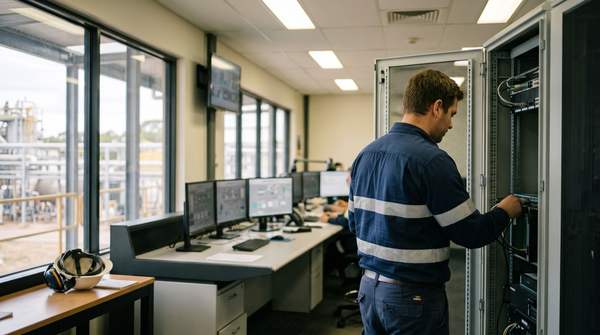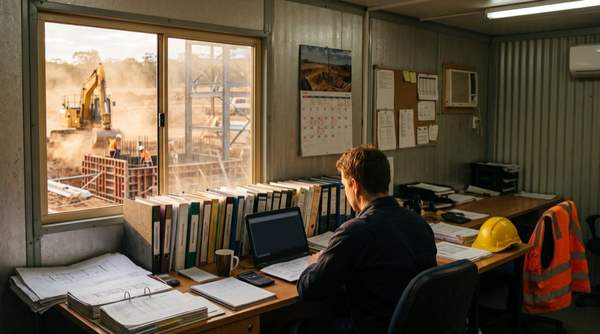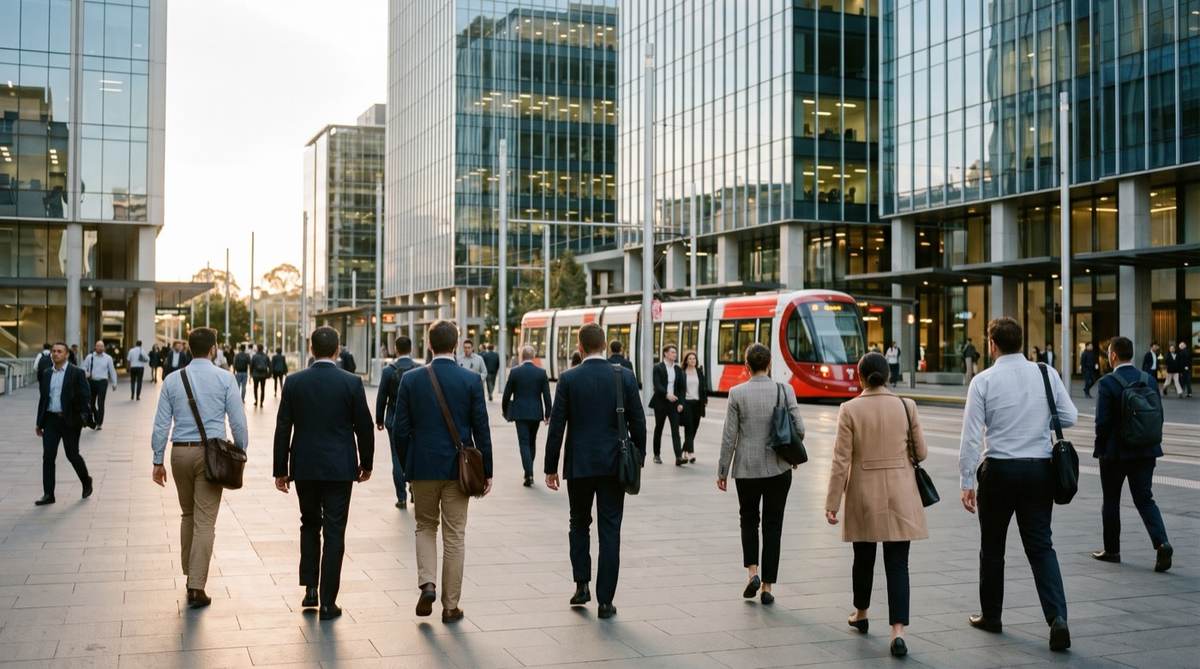
AI automation for Sydney organisations works best on high-volume back-office work: document processing in CBD financial and professional firms, proposals and onboarding in North Sydney, field and compliance workflows in Western Sydney, and order and logistics processing around Mascot. Start with one process, run a four-week pilot alongside your team, and choose a partner who keeps your data in Australia.
Key takeaways
- Sydney's labour costs and competition make back-office efficiency a margin issue for mid-sized and enterprise organisations.
- The right first use case depends on industry and precinct: document AI in the CBD, proposals in North Sydney, field operations in Western Sydney, logistics in South Sydney.
- Run a four-week pilot alongside the existing process before switching anything off.
- Choose a partner who can workshop on site, integrate with your systems and keep data in Australia.
Why are Sydney organisations investing in AI automation?
Sydney is Australia's largest business market and its financial capital. That brings scale and fierce competition, and it raises the cost of every manual hour.
Employment cost is more than salary. From 1 July 2025 the superannuation guarantee rose to 12 per cent, and NSW payroll tax applies above a $1.2 million annual wages threshold, which captures most mid-sized employers. Add workers compensation, training, equipment and management time, and a back-office role costs well above its base salary.
For a 100 to 500 staff organisation, the pressure shows up in familiar places: "a person retypes information between systems", "quotes sit for days waiting on two people", "reporting takes days across entities".
| Current Challenge | AI Approach | Impact | |
|---|---|---|---|
| High labour cost | Skilled staff spend hours on data entry | AI drafts and extracts, staff review | Hours back |
| Competition on response time | Enquiries and quotes wait in queues | Drafted responses and quotes for approval | Faster turnaround |
| Hard-to-fill admin roles | Vacancies open for months | Routine volume automated | Less hiring pressure |
| Document backlog | Invoices and forms processed by hand | Extraction, validation and exception queues | Days to hours |
| Multi-entity reporting | Spreadsheets stitched together monthly | Automated consolidation and dashboards | One version of the numbers |
The NSW Government's Tech Central precinct concentrates technology businesses around Central and Redfern, and the federal National AI Plan (December 2025) has raised board-level attention. When competitors in the CBD shorten their turnaround, firms in Parramatta and Chatswood feel it.
Where does AI automation pay off across Sydney's business districts?
Sydney's business geography is polycentric, and each precinct has a different industry mix.
Where is your Sydney operation based?
- Sydney CBD (Martin Place, Barangaroo, George St)Document AI, client communication, financial and compliance automation
- North Sydney / St Leonards / ChatswoodProfessional services automation, proposals, client onboarding
- Parramatta / Greater Western SydneyConstruction compliance, healthcare administration, field service operations
- Macquarie Park / North RydeIntegration of enterprise systems, analytics, quality automation
- South Sydney (Alexandria, Mascot)Order processing, inventory forecasting, logistics
Sydney CBD: financial and professional services
The CBD concentrates banks, insurers, fund managers, law and accounting firms. High-value uses:
- Document processing: contracts, statements and compliance documents extracted and checked.
- Client communication: drafted emails, meeting summaries and follow-ups for review.
- Financial reporting: reconciliation, anomaly detection and management reporting.
- Compliance monitoring: regulatory change tracking and evidence assembly.
Regulated firms should map AI use to APRA CPS 230 and CPS 234 where they apply. See financial services AI compliance.
North Sydney, St Leonards and Chatswood
A hub for technology, telecommunications and professional services. Common uses:
- Proposal and tender drafting from your past responses and capability library.
- Research and competitive analysis summarised for partners.
- Meeting transcription and action capture.
- Client onboarding: document collection and verification.
See AI proposal and RFP automation.
Parramatta and Greater Western Sydney
Parramatta is Sydney's second CBD, and Western Sydney International Airport is scheduled to open in late 2026. The region's mix of construction, healthcare, government services and field service operators suggests:
- Construction compliance: subcontractor documents, safety reporting, progress claims.
- Healthcare administration: referrals, scheduling and patient communication for multi-site groups.
- Field service operations: job scheduling, quoting and completion paperwork.
- Multilingual customer service for one of Australia's most linguistically diverse regions.
See our construction and field service work.
Macquarie Park and North Ryde
Corporate headquarters, pharmaceuticals, technology and data centres. Organisations here usually have mature systems, so the opportunity is connecting them:
- Linking legacy enterprise systems to AI without rip-and-replace.
- Unifying customer data across channels.
- Forecasting demand, inventory and resources.
- Quality and testing automation.
See legacy system integration with modern AI.
South Sydney: Alexandria to Mascot
Proximity to the airport and Port Botany makes this a logistics and distribution hub:
- Order processing from email and EDI to dispatch.
- Inventory forecasting and reorder points.
- Customer service on order status, returns and tracking, with escalation to staff.
- Route and delivery planning.
See supply chain visibility and disruption prediction.
Which Sydney industries benefit most from AI automation?
Financial services and accounting. Statement and invoice processing, audit preparation, client reporting and research. The sector's regulatory load makes evidence and audit trails part of the design.
Professional services. Contract review, research, proposal preparation and time capture. See AI for professional services firms.
Healthcare groups. Referral management, scheduling, patient communication and documentation drafts signed by clinicians. See healthcare practice AI.
Field service and facilities. Scheduling, quoting, compliance and invoicing across large technician workforces. See facilities predictive maintenance.
Hospitality and venues. Function enquiries, guest communication and supplier ordering across multiple venues. See hospitality AI.
How should a Sydney organisation implement AI automation?
- Week 1Audit and prioritiseMap time-consuming tasks, measure current cost, pick the highest-value process
- Week 2Configure and connectConfigure for your workflow, connect to your ERP, finance or job systems
- Week 3Run alongside your teamAI works in parallel, staff review every output, accuracy is measured
- Week 4DecideCompare against the baseline, then go live, adjust or stop
Week 1: audit. For one week, track hours on data entry, document processing, scheduling, quoting, invoicing and reporting. Note errors and rework. That baseline is your business case.
Week 2: select and configure.
- Define ScopeOne task or a full workflow?
- Check DataMust it stay in Australia?
- IntegrationWhich systems must it read and write?
- SupportIn-house capability or partner?
- DecideConfigure a product or build custom?
For single-task automation, built-in features in Microsoft 365, Xero, MYOB or your ERP may be enough. Multi-system workflows usually need a partner and a proper integration design.
Week 3: run alongside. Never switch off the existing process on day one. Process invoices both ways and compare. Let AI draft quotes and have people approve them. This catches edge cases before they become problems.
Week 4: decide. Compare results with the baseline, document the new workflow, set up monitoring and schedule a 30-day review. See our four-week proof of concept framework.
- Hours spent on the processBefore vs after
- Error and rework rateBefore vs after
- Turnaround timeEnquiry, quote or invoice cycle
- Exception rateShare of items needing a person
- DecisionGo live, adjust or stop
How do you choose an AI consultant in Sydney?
- On-site availability. Can they run workshops at your CBD, Parramatta or North Sydney office?
- Industry experience. Do they understand your regulatory context, whether APRA, health or construction security of payment?
- Integration with your systems. ERP, finance, CRM, job management: they should connect to what you run.
- Australian data residency. With Privacy Act automated decision-making disclosure starting 10 December 2026, ask exactly where data is processed and stored.
- Clear scope. Fixed scope per phase, agreed before work starts, with the right to stop.
Questions to ask:
- Can you workshop with us in person?
- Can you show work in our industry, or your own products, in detail?
- How do you integrate with our systems?
- Where is our data processed, stored and logged?
- What is in scope for each phase, and what happens if it changes?
- Who approves AI outputs before they reach customers or our systems?
- What training do our people get?
Our guide to AI advisory services in Sydney covers what a good partner delivers in the first four weeks.
How Solve8 can help
We work with mid-sized and enterprise Sydney organisations on site for workshops and remotely between them, building automation that runs on your infrastructure in Australia with a person approving outputs. See our Sydney page and process automation service, or talk to us.