AI automation for Perth businesses in 2026 works best on the document-heavy work that sits between systems: compliance reporting for mining services, tender and contract review for engineering and construction firms, invoice processing across entities, and dispatch and job paperwork for logistics and field operators. The strongest projects run on infrastructure in Australia and keep a person approving each output.
This guide is for operations managers, CFOs and IT leads at mid-sized and enterprise Perth and Western Australian organisations, from around 50 staff upward, often with remote sites or several entities. It covers where AI pays, how to roll it out and how to choose a partner.
Key takeaways
- Perth's resources sector has normalised automation. Remote operations centres in Perth run autonomous fleets in the Pilbara.
- The biggest wins for mid-sized and enterprise WA organisations are in compliance documentation, tenders, contracts, invoices and handovers.
- Remote sites need designs that cope with patchy connectivity, with processing at the edge and sync when the link returns.
- Data location matters, particularly for resources contractors with customer or government data obligations.
- Start with one process, run AI alongside the team, measure against a baseline, then expand.
Why is Perth ahead on automation?
The resources sector effect
Perth is home to the headquarters or major operations of many of the world's largest miners. Western Australia's resources sector adopted automation early out of necessity: Pilbara operations sit well over 1,000 km from Perth.
- Rio Tinto runs its Pilbara iron ore operations, including autonomous haul trucks and trains, from an operations centre in Perth.
- Fortescue manages its operations from the Fortescue Hive in Perth.
- BHP runs remote operations for its WA iron ore business from Perth.
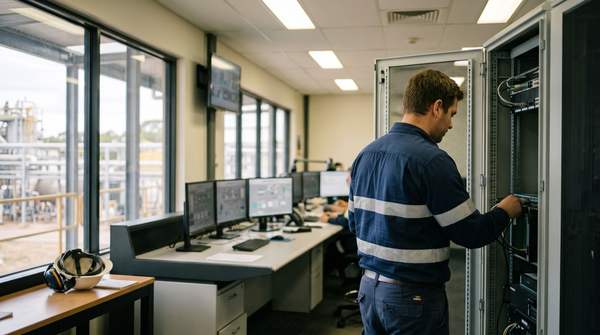
That culture has filtered through the city's engineering, services and supply businesses. When autonomous trucks are run from a CBD office, using AI to read a contract or prepare a compliance report seems far less radical.
Time zone and Asian markets
Perth runs on UTC+8, the same as Singapore, Hong Kong and much of Asia. Teams can work with Asian partners in normal business hours, and Western Australia accounts for a large share of Australia's merchandise exports. AI that drafts responses, translates and prepares documents helps a Perth team serve those markets without extending its day.
The FIFO workforce
Fly-in fly-out rosters forced Perth organisations to build strong habits around remote communication, documentation and shift handovers. Those habits translate well to AI: automated reporting, digital handovers and systems designed for low-connectivity environments.
Why do Perth organisations need AI automation in 2026?
Western Australia's economy has been strong, but labour is tight. Mining competes hard for engineers, electricians and fitters, which pulls skilled people away from services, construction and logistics. Wage pressure follows.
AI automation is a way to do more with the people you can find and keep. It takes the retyping, chasing and assembling off skilled staff so they can do the work only they can do. It does not replace them.
Which Perth industries benefit most from AI automation?
Select your industry to see a recommended starting point
- Mining and resources servicesCompliance reporting and safety documentation
- Engineering and professional servicesTender, contract and document processing
- Construction and infrastructureProject documentation, claims and handover
- Field service and facilitiesJob paperwork, quoting and dispatch
- Oil and gas servicesCompliance reporting and contractor management
- Logistics and transportDispatch, proof of delivery and chain of responsibility records
- Healthcare and allied health groupsReferral intake and clinical admin
Mining and resources services
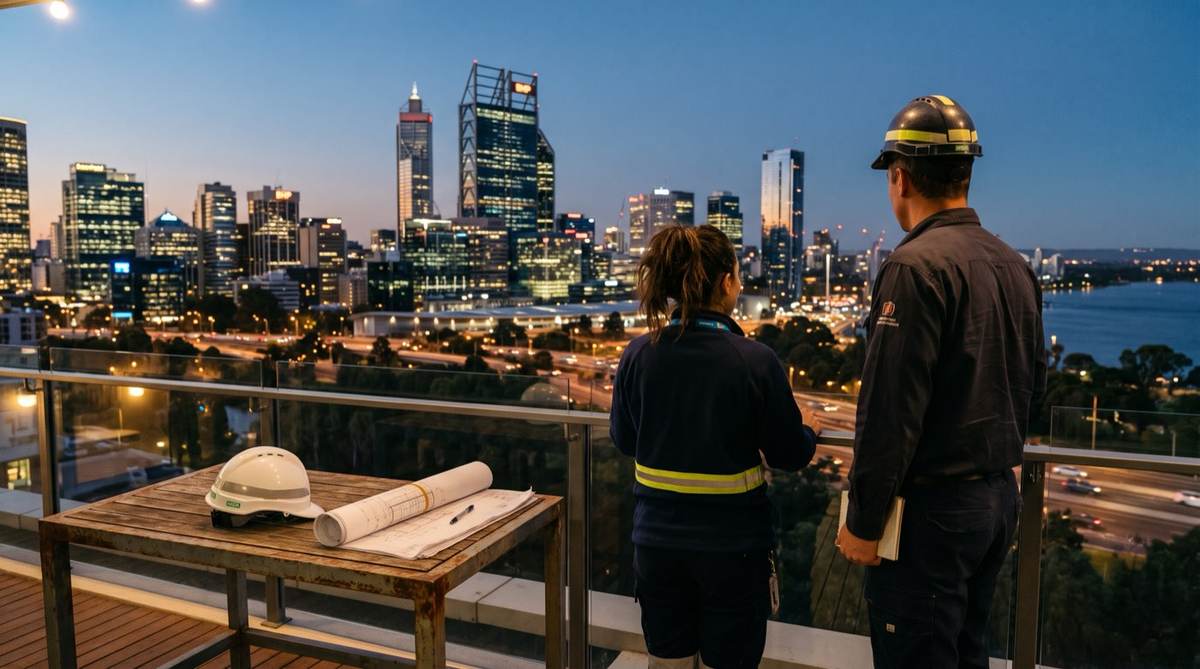
St Georges Terrace and West Perth host a dense cluster of mining head offices, and thousands of Perth organisations service the sector. For mining services contractors, AI helps with:
- Compliance reporting. Assembling WHS documentation, environmental reports and regulatory submissions from site records.
- Safety documentation. AI-assisted incident reporting and hazard tracking, with people deciding actions.
- Contract management. Extracting commercial terms, notice periods and obligations from host-mine contracts.
- Tender responses. Assembling tender documents and checking them against the client's requirements.
Our guides to AI for mining services and asset health AI in mining go deeper on predictive maintenance.
Engineering and professional services
Engineering consultancies, law firms and accounting practices cluster around the CBD, West Perth and Subiaco. AI can help with:
- Invoice processing across entities into Xero, MYOB or Business Central.
- Contract review, flagging key terms and risks for a lawyer or commercial manager.
- Research summaries of technical reports, regulations or case law.
- Proposal drafting from a library of past submissions.
See our contract review guide and AI for professional services.
Construction and infrastructure
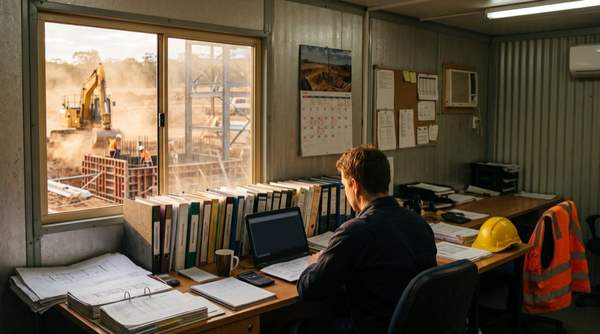
The WA Government's infrastructure program, along with resources projects across the Pilbara and Goldfields, keeps Perth contractors busy. AI helps with progress reports and variation tracking, WHS document processing and audit preparation, subcontractor invoice reconciliation, and defect close-out. Our guide to AI for building contractors covers the regulatory considerations.
Field service and facilities
Perth's metro area is long and spread out, so travel time between jobs is significant, and some operators also service mining camps and remote stations. AI helps by drafting quotes from job notes, preparing job paperwork and compliance certificates, and helping dispatchers allocate work by location and skill. See our guide to AI field quoting for service operators.
Healthcare and allied health groups
Multi-site healthcare and allied health groups can use AI for referral intake, document classification, clinical admin and reporting, with strict attention to privacy and health records obligations.
How should a Perth organisation roll out AI automation?
- Weeks 1-2Audit and prioritiseMap time-consuming tasks, measure current cost and pick the highest-value process
- Weeks 3-6Design and buildConnect to existing systems, design the approval step, test on real documents
- Weeks 7-10Run alongside the teamAI drafts, people check, accuracy compared with the baseline
- Weeks 11-12Go live and measureSwitch to approve-and-post, document the workflow, review results
Step 1: Audit your operations
Track for two weeks: hours on data entry and document processing, hours on quoting and invoicing, hours on compliance and reporting, rework caused by errors, and how long work waits between people. Note which tasks depend on one person's memory, the "if they leave, we're stuck" processes.
Step 2: Choose the right approach
- Define scopeOne task or a full workflow?
- Check dataMust it stay in Australia?
- IntegrationERP, accounting, job system?
- Remote sitesPilbara or Goldfields access?
- DecideOff-the-shelf tool or custom build?
Single-task automation: built-in AI features in your accounting or ERP platform, or workflow tools such as Make or n8n. Our Zapier vs Make vs n8n comparison helps.
Multi-system or custom work: a partner experienced with WA industries and remote operations, a clear scope before committing, and fixed-fee phases you can stop after.
Step 3: Run alongside the team
Never switch off the existing process on day one. Process documents both ways and compare. Let AI draft quotes or reports while people review before anything is sent. For remote sites, test that the system copes with variable connectivity.
Step 4: Go live and measure
Switch to the new process once accuracy meets the agreed threshold, document the workflow, set up monitoring and review results at 30 and 90 days.
- Hours a week on the target processYour time study
- Error and rework rateYour audit sample
- Time work waits between peopleYour system timestamps
- People who can do the task from memoryYour key-person count
- Result after 90 daysMeasured against the baseline
How do you choose AI consultants in Perth?
WA industry context. Look for consultants who understand resources sector compliance, remote site and FIFO operations, and the systems Perth organisations run, from mining ERPs and historians to Xero, MYOB and Business Central.
Integration expertise. Your partner should connect to existing software. Ripping out and replacing core systems is rarely the answer.
Data location. Privacy Act changes on automated decisions commence in December 2026. Ask where data is processed and stored, and whether AI can run on your own infrastructure in Australia. For resources contractors this is often a contractual requirement.
Remote operations capability. If you operate in the Pilbara, Goldfields, Mid West or Kimberley, your partner must understand connectivity limits.
Clear scope. Expect a discovery phase first, then a defined scope and fixed fee per phase.
Questions to ask
- Have you worked with WA resources or mining services organisations?
- Can you show work in our industry, or your own products built on the same pattern?
- How do you connect to our systems?
- Where is our data processed and stored?
- Will it work at remote sites with variable connectivity?
- What is the total cost including implementation and the first year of support?
- How do you handle scope changes?
- What training and handover do you provide?
What government support is available in WA?
Commonwealth and WA Government programs supporting digital and AI adoption change regularly. Check the WA Department of Jobs, Tourism, Science and Innovation, the National AI Centre and business.gov.au for current grants and programs before planning a project around them.
How Solve8 can help
Our consultants and engineers help Perth and WA organisations automate compliance, document and finance processes, running on your infrastructure in Australia with a person approving every output, delivered as fixed-fee phases. See our Perth page, our work with mining and manufacturing operators and our process automation service, or talk to us.