Case study
An AI plan for a major wholesale business
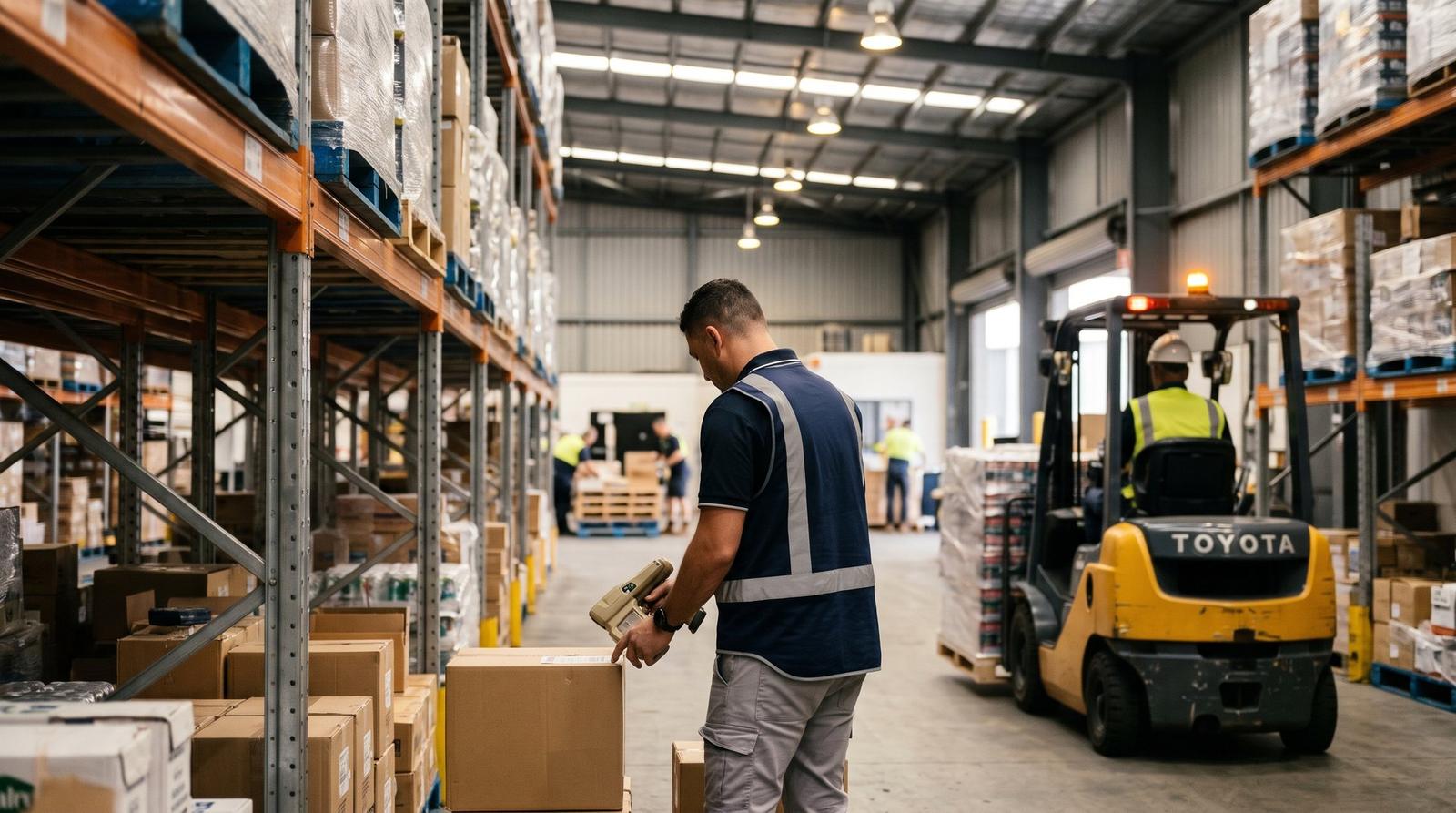
A major Australian wholesale business that supplies several retail brands asked where AI could improve its operations. We checked how its systems handle orders, purchasing, stock and compliance first, then wrote a staged AI plan around what we found.
The short version
Who
A major Australian wholesale business supplying a group of retail brands, with several accounting entities and an in-house CRM at the centre of operations.
What they asked
Where AI could cut manual work and errors across the operation, without putting customer data at risk.
What we did
A fixed-scope assessment of order-to-cash, purchasing, inventory and compliance processes, followed by a staged AI plan.
What they got
A clear split between the errors a system fix solves and the ones worth AI, so leadership spends the AI budget only where it pays. Two findings reports and a staged AI plan set out the detail.
How the work ran
Map the flow
Walkthroughs with the tech lead, developers and the purchasing, warehouse and accounts teams, following an order from entry to invoice and compliance claim.
Check the systems
A review of the CRM database, the accounting entities and the freight steps, to see where the systems let mistakes through.
Write it up
Two findings reports, one for wholesale operations and one for retail, with each issue tied to the step where it starts.
Plan the AI
A staged plan for AI that catches missing or wrong data when it is entered, and checks each job at the end before it is invoiced or claimed.

Controls first, then AI
The group chose to check its controls before investing in AI. The assessment showed where checks were missing, which told us where AI would pay off first and where a plain system fix would do the job for less.
- Process gaps found before any AI spend
- AI aimed at the steps where errors start
- System fixes kept out of the AI budget

Built around their data rules
The client set a clear rule: customer data must never be used to train an outside AI model. The plan starts read-only, runs against the business's own database, flags issues for a person to decide, and logs every flag so managers can see what it caught and why.
- Read-only first
- Runs on their own database
- Flags for a person, never decides alone
- Every flag logged
What leadership agreed next
An audit trail everywhere
Every module records who changed what, when, and the old and new value.
No public AI tools on company data
AI only through a controlled setup that keeps data inside the business.
A staged AI rollout
Start with the checks that stop the costliest errors, prove them alongside the team, then extend.



Questions
How do you build an AI strategy for a wholesale or distribution business?
Start by following real orders through your systems, from entry to invoice, and find the steps where errors and rework start. The AI strategy then targets those steps in order of cost, and anything a simple system rule can fix stays out of the AI budget.
Should we fix our processes before investing in AI?
Usually, at least far enough to know where the gaps are. If a process has no check for a missing code or a wrong quantity, AI added on top will often pass the same errors through. A short assessment sorts the issues into system fixes and AI candidates.
How can AI reduce errors in order-to-cash and inventory?
AI can check orders as they are entered for missing codes, quantities that do not match the kit, or prices that do not follow the product, and check each job at the end before it is invoiced or claimed. A person reviews every flag before anything changes.
Can AI use our customer data without sending it to an outside model?
Yes. The AI can run on your own infrastructure in Australia, read your database without changing it, and keep a log of every check. Customer data is never used to train an outside model.




Want to know where AI fits in your operation?
Book a free 30-minute review and we will show you where to start.
Fixed-fee phases, agreed before we start. Stop after any phase.