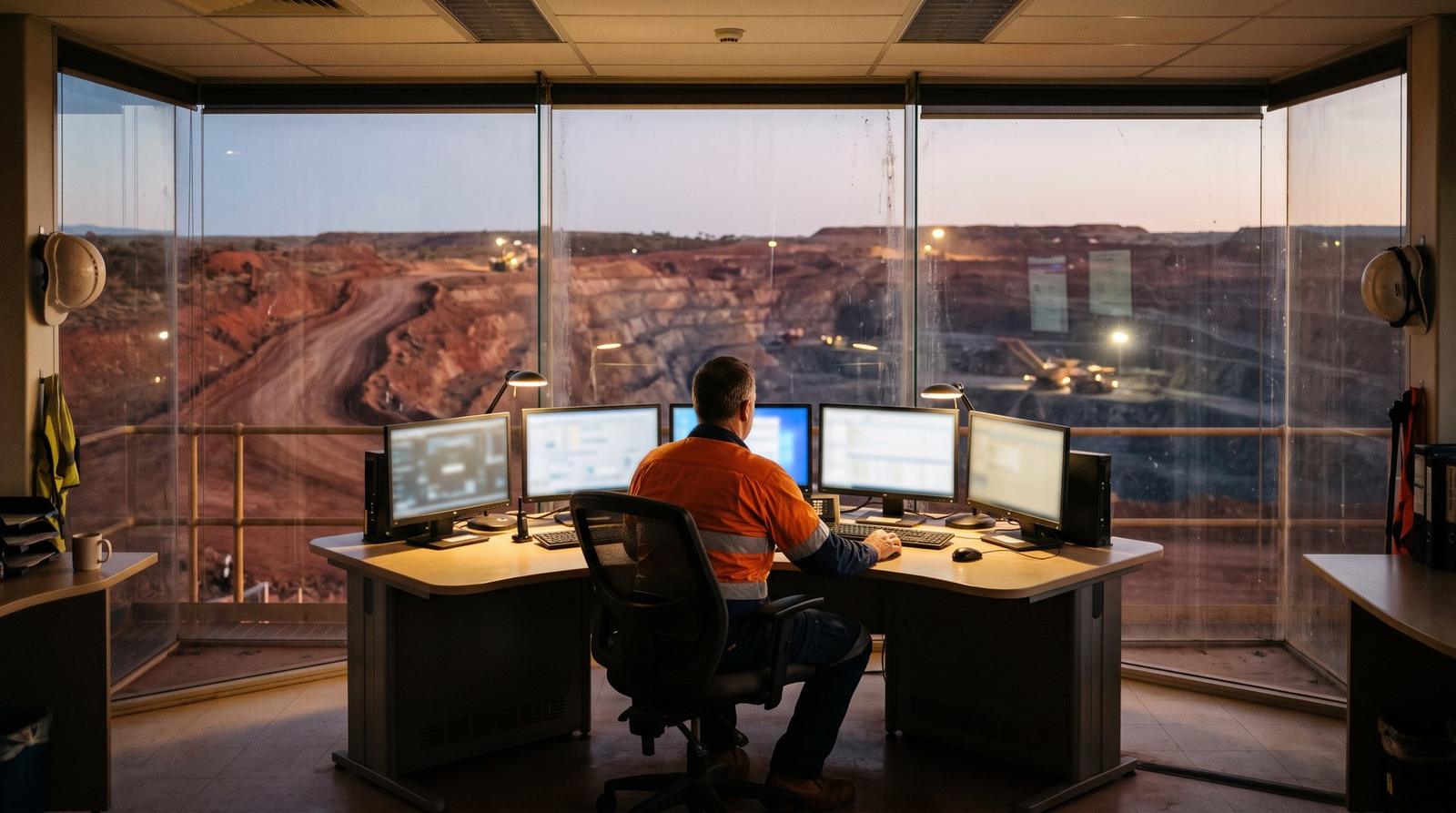
Mining contractor tenders
Every mining client wants a different prequalification pack and tender response. Can AI cut the paperwork?
Last updated
AI can cut prequalification paperwork by drafting each client's prequalification answers from one controlled library of current policies, insurances, licences and safety statistics, flagging certificates that have expired or will expire, and keeping figures consistent across portals. An HSEQ or tender coordinator still checks and signs off every submission before it goes.
How AI handles prequalification packs
Build one controlled library
Pull the current safety management system, policies, insurance certificates, licences, competencies and approved statistics into one register, each with an owner, version and expiry date.
Map each client's questions
AI reads a client's questionnaire or portal export and matches each question to the approved answer and evidence in the library.
Draft the response
AI drafts answers in the client's format and word limits, quoting only approved figures and attaching the current document version.
Flag gaps and expiries
Anything missing, out of date or due to expire before the contract starts is listed for the document owner to fix.
Review and sign off
The HSEQ or tender coordinator checks every answer, and an authorised person signs any declaration before submission.
Feed back
Edits made in review go back into the library, so the next pack starts from better answers.
What mining clients typically ask, and who does what
| Requirement | What clients typically ask for | AI does | Person does |
|---|---|---|---|
| Safety management system | WHS policy, procedures, risk assessments, SWMS and any ISO 45001 certification | Finds the current version and drafts the description | Confirms the system matches how work is done on site |
| Insurances | Public liability, workers compensation and professional indemnity certificates, often with client-set minimums | Checks cover amounts and expiry dates against each client's minimums | Renews policies and approves the certificate sent |
| Licences and competencies | Trade and high-risk work licences, tickets, inductions and appointment letters | Flags expired or missing items by person and site | Chases renewals and confirms who is mobilised |
| Incident rates | Injury frequency rates such as TRIFR and LTIFR over set periods, plus serious incidents | Inserts the approved figure for the period asked | Approves the calculation and any explanation |
| Policies and declarations | Environment, quality, fitness for work, drug and alcohol, and modern slavery statements | Drafts answers from the approved policy text | Signs declarations and confirms they are current |
| Capability and methodology | Similar projects, equipment, people and approach to the scope | Drafts from past responses and project records | Tailors to the client and scope, and checks every claim |
Australian platforms and rules
Many tier one and mid-tier mining clients run prequalification through a contractor management platform. Avetta is used by BHP Mt Arthur Coal to collect and verify contractors' insurances and licences and to manage worker competencies. Cm3 assesses contractors through risk reviews covering WHS policies, procedures, risk assessments, insurance validity and expiry, licences and management system certifications, with clients setting their own minimum insurance cover. Rapid Global is used by Australian industrial operators such as Gladstone Ports Corporation for contractor registration and safety document uploads. Each client configures its own requirements, so the same contractor answers similar questions in different formats.
Underneath the portals sit the mines safety laws. Queensland's Mining and Quarrying Safety and Health Act 1999 and Coal Mining Safety and Health Act 1999 make the site senior executive responsible for contractors working within the mine's safety and health management system. Western Australia's Work Health and Safety (Mines) Regulations 2022 and the NSW Work Health and Safety (Mines and Petroleum Sites) laws set similar expectations. A prequalification pack is evidence a contractor can operate inside those systems, which is why accuracy matters more than speed.
Limits and when not to use AI
Declarations and signatures
AI must never sign or submit a declaration. A named person is accountable for every statement made to a client.
Safety statistics
AI should insert approved figures, not calculate injury rates from raw incident data without an HSEQ check.
Uncontrolled documents
If the library holds superseded procedures or draft policies, AI will repeat them. Fix document control first.
Very low volume
If the business answers a few prequalifications a year from one client, a well-kept template may be enough.
Site-specific methodology
AI drafts a starting point, but the method for a specific mine and scope needs the people who will do the work.
Who should own it
HSEQ manager
Owns the controlled library, the approved safety statistics and the accuracy of every safety answer.
Tender or bid coordinator
Runs each response, reviews AI drafts and tracks what was submitted to which client.
Document owners
Keep their policies, insurances and licences current when the AI flags an expiry.
General manager or authorised signatory
Signs declarations and approves submissions to tier one clients.
Related work
- Mining, energy and manufacturingOperational data and AI for mining, resources, energy and manufacturing sites.
- Construction and infrastructureSubcontractor compliance, ITPs and progress claims taken off project teams.
- AI proposal and RFP automationAI first drafts and content libraries for tenders.
- Custom AI developmentDocuments read, checked and written into your systems, with people approving.
Sources
Avetta, BHP Mt Arthur Coal customer story: https://www.avetta.com/customers/bhp-mt-arthur-coal-innovation-drives-safety-in-mining
Cm3, Contractor prequalification: https://www.cm3.com.au/solutions/contractor-prequalification/
Gladstone Ports Corporation, Rapid Global user guide: https://gpcl.com.au/wp-content/uploads/2022/08/Rapid-Global-User-Guide.pdf
Queensland Government, Mining and Quarrying Safety and Health Act 1999: https://www.legislation.qld.gov.au/view/pdf/current/act-1999-040
Questions
What do mining prequalification platforms usually ask contractors for?
Most ask for a safety management system description or documents, WHS policies and procedures, risk assessments, insurance certificates with cover amounts and expiry dates, trade and high-risk work licences, worker competencies and incident statistics. Each mining client configures its own requirements in platforms such as Avetta, Cm3 or Rapid Global, so the questions overlap but the format and minimums differ.
Can AI fill in an Avetta or Cm3 questionnaire directly?
AI can draft every answer and prepare the matching evidence files, but a person should enter or approve the content in the portal and accept its declarations. Portals hold a contractor legally to what is submitted, so the safest design has AI prepare and a named HSEQ or tender coordinator submit.
How does AI know which certificate or procedure is current?
Only through the document register. Each item in the library needs a version, an owner, an issue date and an expiry date. AI reads that register, uses the current version and flags anything expired or expiring before the contract starts. If the register is wrong, the answer will be wrong, so document control comes first.
Should AI calculate TRIFR and LTIFR for a tender?
No. Injury frequency rates depend on agreed definitions, hours worked and the period a client asks for. The HSEQ manager should approve each figure in the library, and AI should insert the approved number for the requested period. That keeps the same statistic consistent across every client and portal.
Where should the document library sit for AI tender drafting?
Inside the contractor's own environment, such as its existing SharePoint or document management system, with access limited by role. Set it up so the AI reads only from that controlled library in Australia and no tender or safety content trains a public model.
Can the same library help with tender methodology sections?
Yes, as a starting point. Past methodologies, project summaries and equipment lists let AI draft a first version quickly. The method for a specific mine and scope still needs the supervisors and engineers who will do the work, because evaluators look for detail that only comes from people who know the site.

Answering the same questions for every client?
A 30-minute review with a senior consultant. You leave with a written one-page summary you can share internally.
Fixed-fee phases, agreed before we start. Stop after any phase.