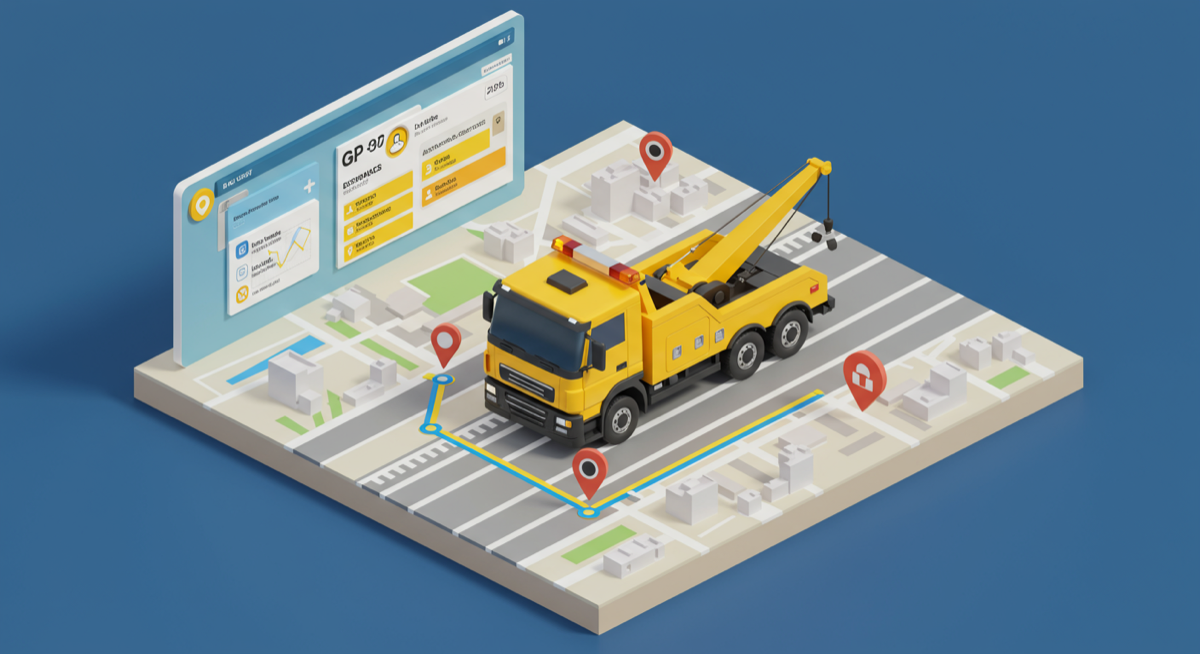
Consider a typical Melbourne-based towing company running 12 trucks across the eastern suburbs. Their dispatcher, a seasoned operator, handles everything: incoming calls, driver allocation, ETA updates, insurance paperwork, and billing.
The problem? They're drowning.
On any given night, a towing company of this size might be missing 30-40% of incoming calls during peak hours. Each missed call represents an average job value of $180. Over a year, that translates to more than $150,000 in lost revenue - and that is before counting the insurance club work going to competitors.
The Australian towing services market is worth $629.2 million in 2025, according to IBISWorld, with 2,824 businesses competing for work. Yet most operators are running on the same manual processes they used a decade ago.
Meanwhile, a single stranded motorist can cost a towing company the job entirely if they cannot answer the phone within 30 seconds. NRMA reports an average metro response target of under 35 minutes. Miss that window, and you are not just losing one job, you are losing future motor club referrals.
This is where AI changes the game for Australian towing businesses. Not through futuristic robots, but through practical tools that answer calls at 3 AM, dispatch the right truck automatically, and keep customers informed without your team lifting a finger.
Calculate what missed calls are costing your towing business:
The towing industry has a unique operational challenge: unpredictable demand combined with time-critical response requirements.
Unlike a plumber who can schedule jobs a week out, you need to respond to a stranded motorist within minutes. That means having the right truck, in the right location, available at exactly the right time.
| Metric | Manual Dispatch | AI Dispatch | Improvement |
|---|---|---|---|
| Call answer rate | 65-70% | 99.9% | 30%+ |
| Dispatch decision time | 3-5 minutes | 15 seconds | 95% faster |
| Driver allocation accuracy | Based on gut feel | GPS + workload balanced | 40% better |
| Customer ETA updates | Manual calls | Automated SMS | 100% coverage |
| After-hours coverage | $25-40/hour staff | $0.10-0.50/call | 95% cheaper |
Traditional dispatch systems struggle because they rely on human operators making split-second decisions with incomplete information. Your dispatcher might know that Dave's truck is closer, but they might not know that Dave just finished a heavy recovery and needs a break, or that traffic on the M1 has added 20 minutes to his route.
According to research from IEEE Public Safety Technology, AI-assisted dispatch systems can analyse vast amounts of data in real-time, including incoming calls, historical incident data, traffic patterns, weather conditions, and available resources, generating rapid, data-driven recommendations that human dispatchers simply cannot match.
There are four key areas where AI delivers genuine, measurable ROI for Australian towing companies.
The Problem: A stranded motorist calls at 2 AM. Your night dispatcher is handling another call, or worse, there is no one on duty. The customer hangs up after 30 seconds and calls your competitor.
How AI Solves It: AI voice agents like HookIt AI and Voiceflow's towing solutions answer calls instantly, 24/7/365, handling unlimited simultaneous calls. They conduct natural conversations to collect:
The AI then automatically dispatches the job to the most appropriate available driver via text or app notification.
Real Results: According to HookIt AI, towing companies using their platform report:
What Actually Works:
What Still Needs Humans:
The Problem: Your dispatcher sends the nearest truck, but "nearest" does not always mean "fastest." Traffic, driver fatigue, truck capabilities, and current workload all factor into optimal allocation.
How AI Solves It: AI dispatch systems analyse multiple variables simultaneously:
According to NextBillion.ai's emergency services research, AI routing can reduce response times by 22-28% compared to conventional dispatch methods. Machine learning models now forecast incident hotspots with 89% accuracy, allowing proactive positioning of vehicles.
Platform Example: Shift AI offers purpose-built towing telematics that includes:
The Safety Factor: Tow truck drivers face one of the highest occupational fatality rates, estimated at over 40 deaths per 100,000 workers according to Shift AI. AI-powered driver monitoring systems detect fatigue and distraction in real-time, issuing immediate alerts during high-risk roadside operations.
The Problem: A stranded motorist's biggest frustration is not knowing when help will arrive. They call your office repeatedly, tying up your dispatcher and increasing their anxiety.
How AI Solves It: Automated customer communication via SMS keeps motorists informed throughout the process:
The best systems provide:
Measured Impact: According to Sunrise Technologies, towing operations implementing automated customer communication report:
The Problem: Motor club work (NRMA, RACV, RACQ, Allianz) represents steady revenue, but manual processing of digital dispatches is time-consuming and error-prone.
How AI Solves It: Modern dispatch software integrates directly with motor club and insurance company systems, eliminating manual data entry.
Towbook processes digital dispatches from 27+ providers including:
Calls from motor clubs go directly into the system, automatically creating a new dispatch with all customer and vehicle information pre-populated. This eliminates transcription errors and saves 5-10 minutes per job.
Autura's Dispatch Anywhere extends this further with:
One of the biggest customer service failures in towing is inconsistent pricing. A customer gets quoted $180 on the phone, but the driver charges $220 on site. Disputes follow.
AI-powered quoting systems eliminate this by:
Dynamic Pricing Opportunity: AI can also optimise pricing based on demand patterns:
However, a word of caution from BlackBall Logistics: In 2024, a rental firm lost 10% of its customer base after aggressive AI-driven price hikes were perceived as exploitative. Dynamic pricing requires careful implementation and transparent communication.
Beyond dispatch, AI transforms fleet operations through continuous monitoring and predictive insights.
Every towing operation needs real-time visibility of truck locations. Australian options include:
AI analyses vehicle usage patterns, engine diagnostics, and historical data to predict failures before they occur.
According to Shift AI, predictive maintenance for towing fleets delivers:
AI dashcams with Driver Monitoring Systems (DMS) detect:
Given the dangerous nature of roadside work, this is not just about efficiency but protecting your team.
Several platforms serve the Australian market with varying AI capabilities:
Bizzow by Intellitrac
Key International Platforms Available in Australia
Towbook (USA-based, globally used)
Autura Dispatch Anywhere (USA-based)
HookIt AI (AI-focused newcomer)
Here is a realistic 16-week roadmap for Australian towing operators:
Before implementing anything, answer these questions:
Trial at least two platforms before committing. Key criteria:
Start with the basics:
Layer on AI capabilities:
Refine based on data:
Based on industry data, here is a realistic ROI projection for a 10-truck towing operation:
| Metric | Current State | With AI Implementation | Improvement |
|---|---|---|---|
| Missed calls per month | 150 | 15 | 90% reduction |
| Average response time | 45 minutes | 28 minutes | 38% faster |
| Jobs per truck per day | 4.2 | 5.5 | 31% increase |
| After-hours labour cost | $3,500/month | $500/month | $3,000/month saved |
| Admin hours per week | 40 hours | 15 hours | 25 hours freed |
Key Assumptions:
Australia faces a critical driver shortage across the transport sector. According to NatRoad, the country is short nearly 28,000 heavy vehicle drivers, with projections showing this could reach 78,000 by 2029.
Nearly half of all truck drivers are over 55 years old. Only 5.2% are under 25. You cannot hire your way out of this problem.
For towing operators, this means:
AI is not about replacing drivers. It is about letting your drivers do what they do best (recover vehicles) while AI handles the admin, dispatch, and customer communication that currently consumes hours of productive time.
If you are running a towing operation in Australia and want to explore AI automation, here is my recommendation:
This week:
This month:
This quarter:
The towing industry is at an inflection point. Motor clubs are increasingly favouring operators with digital dispatch capabilities. Insurance companies want faster documentation. Customers expect Uber-like tracking and communication.
The operators who embrace AI now will have a significant advantage as the industry evolves. Those who wait will find themselves competing on price alone, a race to the bottom that benefits no one.
Book a consultation to discuss AI implementation for your towing operation
Never Miss Another Call
AdminAgent is our AI phone receptionist that answers every call 24/7 with a natural Aussie accent. It captures lead details, books appointments, and costs less than $5/day.
Related Resources:
Sources: Research synthesised from IBISWorld Towing Services Australia 2025, Sunrise Technologies AI in Tow Service Management, HookIt AI, Shift AI Towing Solutions, Autura Dispatch Anywhere, Towbook Features, IEEE Public Safety AI Dispatch Systems, NextBillion.ai Emergency Services Routing, NatRoad Driver Shortage Report, and implementation experience across Australian service businesses.